Luxury vinyl plank is a printed wood or stone design under a clear wear layer, on a waterproof
PVC core — flexible and glued down, or rigid and clicked together. It is now the most-bought flooring in the
country, it is the floor most people should put in a kitchen or a basement, and it is also the
floor most often bought wrong — because the specification that decides how it ages is a
number in mil that does not show in the box. This page is the whole subject: what it is, what
it costs installed, which core to buy, where it works, how it fails, and how to live with it. The store
visit — reading the tag, the sample test, the nine things to get in writing — is
its own page: how to buy LVP.
Start here
Three readers come to this page. Which one are you?
Everything is on the page. This just says where to start, and what to skip.
Materials and labor together, across all three cores. Roughly $0.38–$0.45 per square foot per year
over a 10–25 year life, which is cheaper to own than most of what it replaces.
Waterproof plank, not waterproof floor
Nothing in either core swells or rots. Water can still reach the subfloor through the seams,
which is why the vapor retarder under it and the moisture test before it matter as much as the plank.
12 mil minimum. 20 for dogs and commercial.
The wear layer is the durability spec, and a 6 mil and a 20 mil plank look the same in the box.
This single number is where most disappointment with LVP comes from.
Three cores: flexible, SPC, WPC
Flexible plank is thin solid PVC, glued down — the original, and the commercial standard. SPC is
stone-stiffened and resists dents; WPC is foamed, warmer and quieter. All three are waterproof; only the
rigid two click together and float.
The easiest floor to install yourself
Floating click, no adhesive, over plywood, a flat slab or existing tile. A competent first-timer does
a bedroom in a day. Rated 5/5 for DIY, the top of the scale.
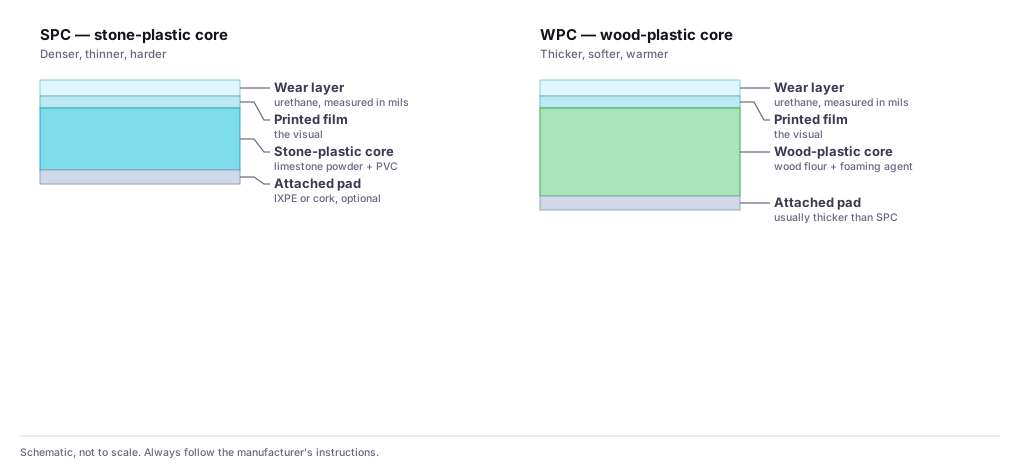
Four layers, bonded at the factory, and the order matters because each one decides a different
thing about how the floor lives. From the top down:
01
Wear layer
A clear urethane film measured in mil (thousandths of an inch), often with aluminum-oxide or ceramic-bead
additives for scratch resistance. It is the only layer that wears, and its thickness is the specification that
separates a rental-grade plank from a commercial one. Everything under it is just the picture and the core.
02
Print film
A photograph of wood or stone, which is why the same knot repeats across a large floor and why a good product
ships more unique boards per carton than a cheap one. Embossed-in-register texture, where the surface relief
follows the printed grain, is the difference between a plank that reads as wood at a glance and one that
reads as vinyl.
03
Core
The structure, and the thing the names describe. All three are PVC. Flexible plank is
plasticized vinyl with nothing mixed in — two to three millimeters, bends in the hand, glued down, no
click joint. SPC is the same vinyl loaded with limestone powder into a dense rigid slab;
WPC is a foamed blend with wood flour, thicker and lighter. None contains anything water can
swell. On the rigid two the click-lock profile is milled into this layer, so core density is also what
decides whether the joint holds.
04
Attached pad
An IXPE or EVA foam, or cork, bonded to the back on mid and upper-tier product. It takes the hollow ring off
the plank and saves an installation step. It is thinner than a roll underlayment, it stops at every board edge,
and you cannot change it later — so which foam it is belongs on your checklist.
The pads, compared →
The core is the whole difference. Everything else in the stack is the same — and every core is PVC.
The decision inside the decision
Flexible, SPC or WPC
Same layers, same waterproofing, same wear-layer rules. The core is the one thing that differs, and it
decides how the floor is installed, how it feels underfoot, what it does under a heavy appliance, and how
well it hides a subfloor that is not quite flat. Each has a full page; this is the version you can decide
from. For a house the answer is nearly always one of the rigid two; flexible plank is the commercial and
budget option, and the one that came first.
Flexible Luxury Vinyl Plank
$3.50–$9.00/sq ft installed · 10–20 years · Extreme traffic · commercially rated
Flexible luxury vinyl plank — also sold as dryback or glue-down LVP — is the vinyl plank that came before rigid core: a printed wood or stone design under a clear wear layer, on a solid plasticized PVC body about two to three millimeters thick. It bends in your hands, it has no click joint, and it is glued to the subfloor with a troweled adhesive. It is the standard vinyl plank in retail, offices and healthcare, and the entry price for a vinyl plank floor at home.
Durability
3/5
Comfort
2/5
Quiet
2/5
DIY
2/5
Best for: retail, offices, healthcare and anywhere a floor is repaired rather than replaced; open plans with long runs and no place for a transition; budget rooms over a flat, sound slab or skim-coated subfloor.
Avoid for: any subfloor that is not flat and skim-coated — it will telegraph; slabs that have not been moisture-tested.
$4.00–$11.00/sq ft installed · 15–25 years · Extreme traffic · commercially rated
SPC stands for stone-plastic composite. It's vinyl plank flooring built around a rigid core made from crushed limestone mixed with plastic, topped with a printed layer that looks like wood, stone or tile. Because that core has no wood or paper in it anywhere, it can't swell or rot from water — you can mop it without a second thought.
Durability
4/5
Comfort
2/5
Quiet
3/5
DIY
5/5
Best for: kitchens, bathrooms, laundry, mudrooms; basements and below-grade slabs; rentals, flips and property management.
Avoid for: sunrooms with extreme direct heat (some products); spaces wanting genuine wood resale value.
$5.00–$13.00/sq ft installed · 15–25 years · Heavy traffic
WPC stands for wood-plastic composite. It's built the same basic way as SPC vinyl plank — a rigid, waterproof core under a printed wood or stone layer — but the core is a foamed plastic-and-wood-flour blend instead of solid stone powder. That foam is what makes it feel warmer, softer and quieter underfoot than SPC, at the cost of denting more easily under something heavy.
Durability
3/5
Comfort
4/5
Quiet
4/5
DIY
5/5
Best for: bedrooms, living rooms and second floors; homes wanting quieter, warmer waterproof floors; slabs with minor imperfections.
Avoid for: rooms with very heavy point loads; commercial and retail traffic.
Choose WPC upstairs and in bedrooms for comfort and quiet; choose SPC downstairs and in kitchens for dent resistance. Many homes use both.
The softer, warmer, quieter floor and the dent-resistant floor are not the same floor. That is the entire
trade, and it is a room-by-room decision rather than a house-wide one.
The head-to-head, with the numbers →
The number that matters
Wear layer, in mil
This is the specification that decides whether the floor looks new in year eight or tired in year
three, and it is printed on the spec sheet rather than the box. Total plank thickness in millimeters
is a different number and a much less important one — a thick plank with a thin wear layer is a
thick plank that scratches. Retail listings bucket the same number as
“moderate traffic” (12 to 19.99 mil) and “heavy traffic” (20 mil and up), which is
a fair translation; the table is the longer version.
Wear layer
Tier
What it is for
6 mil
Light residential
Guest rooms, closets, a rental you are turning over. Scratches in a busy household. It can look identical to a 20 mil plank in the box.
8 mil
Rental grade
The floor of what is worth buying. Below 8 mil is a product for a landlord, not a family.
12 mil
Family home
The minimum to specify for a house with children. Busy rooms, ordinary pets, the whole ground floor.
20 mil
Commercial, and dogs
Commercial-grade abrasion resistance in a residential product. The number to ask for with a large dog, and where most disappointment with LVP is avoided.
28–30 mil
Heavy commercial
Retail, restaurants and anywhere with a rolling load. Over-specified for a house, and priced accordingly.
Ask whether the wear layer is enhanced
Aluminum-oxide or ceramic-bead additives in the top coat raise scratch resistance substantially at the same
mil rating — the practical difference between a floor that shows every claw mark and one that does not.
Two products with identical wear-layer numbers can behave very differently under a dog, and the enhanced coating
is usually named on the spec sheet and nowhere else.
Money
What LVP costs installed
The figures below are the same bands the cost guide and the calculator use,
so they cannot disagree with each other. Materials are the smaller half of the number on a
professional job; labor and preparation are where quotes diverge.
Wear layer (20 mil costs more than 12), an attached acoustic pad, embossed-in-register texture, and longer,
wider planks. Brand carries less than people assume; the spec sheet carries more.
What the quote leaves out
Subfloor preparation is the largest hidden line item in a resilient quote, because thin flooring copies
every ridge under it. Transitions, moisture testing over a slab, tear-out and disposal are the others.
Put two bids on the same footing →
Doing it yourself
The tool kit runs $150.00–$400.00 to buy, and the labor line disappears. A competent first-timer does a bedroom in a day and a whole floor over a long weekend.
What the job actually involves →
Both cores are genuinely indifferent to water. There is no wood, paper or fiberboard anywhere in an
SPC plank, and the wood in WPC is encapsulated flour rather than lumber, so a dropped pan of water, a
pet accident or a dishwasher leak is a mopping job. That is the claim on the box, and it is true.
What the box does not say is that the floor is made of several hundred of those planks with a seam
between every pair. Standing water finds the seams and travels through them to whatever is underneath.
In a laundry room that turns a burst supply line from a replacement into a drying-out, which is a real
and valuable difference. It does not turn the room into a basin the way heat-welded
sheet vinyl with a coved base does.
Over a concrete slab the water usually comes from below, as vapor, and the plank does nothing about it
either way. Test the slab first: ASTM F2170 caps in-slab relative humidity at 75 percent unless the
flooring or adhesive manufacturer states otherwise, and some products are warranted to 80–85. Then lay
6-mil polyethylene or a film-backed underlayment under a floating floor, laps sealed. Skipping this does
not fail immediately; it fails from below, eighteen months later, and the floor comes up.
Where LVP sits among the waterproof floors
Seven materials on this site are unaffected by water: flexible, SPC and WPC plank, sheet vinyl, porcelain
tile, terrazzo and epoxy. Rigid-core LVP is the warmest and quietest of them and the only one a first-timer installs.
All six, by room →
Room by room
Where LVP works, and where it does not
These are the room guides' own rankings, not a separate opinion. Where LVP is a pick, the rank and
the reason are the guide's; where a guide steers away from it, that is listed too.
Sunroom — Foamed vinyl and heat behind glass is the combination most likely to move. Gapping and buckling in sunrooms is a common warranty conversation.
Sun and heat
All vinyl moves with temperature, WPC more than SPC. A wall of west-facing glass, a sunroom, or a
black plank in a bay window can push a floating floor past its expansion gap and buckle it, and some
products are simply not rated for it. Over radiant heat the rule is a surface-temperature cap, typically
80–85°F. Which floors suit radiant, and the limits →
Going down
How it is installed
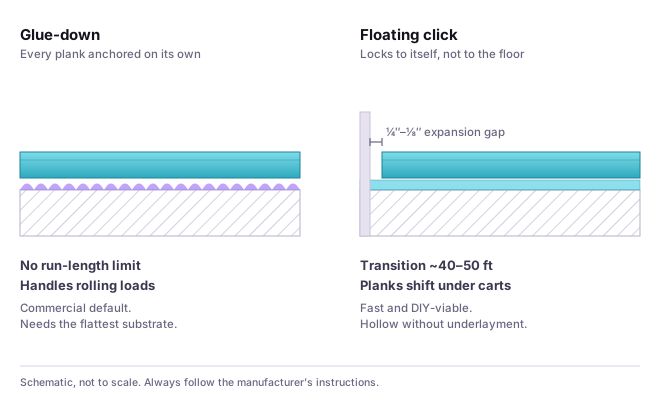
Two methods do nearly all of it, and the core decides which. Rigid SPC and WPC plank float: click-lock
joints, no adhesive, the one floor most people can lay themselves. Flexible plank is glued — full-spread
or pressure-sensitive adhesive over a prepared slab — the commercial method and the norm for most
tile-format LVT. Two more sit on the same shelf, loose-lay and peel-and-stick, and are worth knowing mostly
so you do not buy one by accident. The subfloor usually makes the choice before you do.
Same plank, different behavior underfoot.
Floating click
Planks lock to each other and to nothing else, so the whole floor is one raft that expands and contracts
as a unit. That is why it needs a gap at every wall and obstruction, a transition before the manufacturer's
stated maximum run, and trim nailed to the wall rather than through the plank. Goes over plywood, a flat slab
or existing flat tile with no adhesive, so an occupied house can be done room by room.
Watch out: a pinned floor — a kitchen island set on top of it, a threshold
screwed through it — separates at its weakest joint. Gapping, explained →
Glue-down (flexible plank)
Permanent, no expansion gap to manage, no maximum run, no hollow sound, and repairable one plank at a time
— which is why commercial floors are specified this way. Unforgiving of a bad slab: a thin plank copies
every ridge, and moisture testing is not optional, because the adhesive is what fails when the slab is wet and
it fails everywhere at once. A professional job, unless it is the loose-lay variant.
A heavy flexible plank, 5 mm or so, with a friction backing that grips the subfloor on its own weight; glued
only at the perimeter and doorways. No click joint to fail, no full-spread adhesive, and one plank lifts out
for repair — which is why it shows up in offices and rentals. It wants the same flat, dry slab glue-down
does, and it is not a floor for a slope or a busy kitchen where a chair can shove a plank sideways.
Peel-and-stick
A 2 or 3 mil self-adhesive plank or tile, sold by the piece for a dollar and change per square foot. The
adhesive is the whole system, and adhesive is what gives up under heat by a window, humidity in a bathroom, or a
subfloor that was not spotless: corners lift, edges curl, seams open. Fine for a closet, a rental turnover or a
laundry corner; the floor most people regret within a year everywhere else.
The four things that go wrong before the first plank
01
Flatness
Around 3/16 inch over 10 feet is the tolerance for plank goods. Every ridge above that is still there after the
floor goes down, because thin flooring copies what it is laid over. Thicker rigid-core planks hide more of it.
They do not fix it.
02
Moisture
Over a slab, an ASTM F2170 in-slab relative-humidity test before anything else. A moisture meter costs less
than one carton of plank and is the single most skipped step in a basement installation.
03
Underlayment
Attached pad means no additional cushion — stacking it lets the joint flex and voids the warranty. The
only thing under a pre-padded plank on concrete is a vapor retarder. Never rubber under vinyl.
04
Temperature
Rigid cores move with temperature, so the cartons sit in the room at its normal temperature before they are
opened, for as long as the manufacturer says. A floor laid cold and lived in warm is a floor that buckles.
If you are doing it yourself
The one to do yourself. Tapping block and pull bar: Closing the last row against a wall is impossible without the pull bar. Never tap a plank directly — you crush the locking edge and the joint stops holding. Spacers: They hold the expansion gap. This is the single most skipped item and the single most common cause of a buckled floating floor. Miter saw or a good jigsaw: Cross-cuts. A jigsaw works and is slower and rougher; a miter saw is why a professional job has tight cuts.
The full kit and the costs nobody mentions →
From the failure register
How LVP fails
Three failure modes on this site name luxury vinyl plank. Two are the installation's fault and one is the
product doing exactly what its description said it would. None of them is the plank wearing out.
There is no refinishing and no repair for a scratch through the wear layer; a damaged plank in a floating floor
is replaced, which is the one real maintenance advantage over sheet goods. Routine care is about as easy as
flooring gets. The short list of things that destroy it is the part worth reading.
Routine
Sweep or vacuum (beater bar off) regularly
Damp-mop with a pH-neutral vinyl cleaner as often as you like — it is waterproof
Felt pads under furniture; wide non-marking casters on rolling chairs
Walk-off mats at doors to trap abrasive grit
Never
Never use rubber-backed mats — vinyl reacts with rubber and stains permanently
Never use abrasive pads, bleach, or "mop and shine" wax products
Never drag appliances across it without hardboard protection
Never steam-clean a WPC floor at high heat — it can soften the foam core
Pets
The default answer for dogs, and mostly deserved: waterproof core, textured surface with real grip, and hair sweeps straight off. Specify 20 mil wear layer, not 6 or 12 — the thin residential tiers scratch, and that's where most disappointment with LVP comes from.
Rubber-backed mats, rubber underlayment and rubber casters all do the same thing: plasticizers migrate out
of the vinyl into the rubber and leave a yellow-to-amber stain that comes up through the plank. It is
permanent, and many manufacturers void the warranty over it specifically. Felt pads, non-marking casters
and mats with a woven or vinyl backing instead.
Head to head
LVP against the alternatives
The specific matchups people weigh before deciding, each with its own page. The verdicts are the
comparison pages' own.
Luxury vinyl tile shares the SPC core, so wear ratings, waterproofing and traffic ratings carry across
almost unchanged. The differences are format, grout-look joints, and that tile is more often glued down.
The LVT guide →
Common questions
Luxury vinyl plank — frequently asked
No, and the difference is the core. Standard laminate has a high-density fiberboard core, which is wood and swells irreversibly once water reaches a seam. LVP has a PVC core — flexible, stone-filled SPC or foamed WPC — with no organic content in any of them, so it cannot swell. Laminate is the harder, more scratch-resistant surface; LVP is the genuinely waterproof one. The look is similar enough that the two are routinely confused in a showroom.
Twelve mil as the minimum for a family home, twenty mil for anything commercial and for a house with a large dog. Below eight mil is a rental-grade product. The wear layer is the clear film over the printed design, and it is the specification that decides whether the floor looks new in year eight or tired in year three — a six mil and a twenty mil plank can look identical in the box, so ask for the number in writing.
The plank is. None of the three cores — flexible PVC, SPC or WPC — has any organic material to swell or rot, so a spill, a pet accident or a burst supply line is a mopping job rather than a replacement job. The floor is not: water can still travel through the seams between planks to the subfloor underneath. In a laundry room that makes a leak a drying problem instead of a failure. Over a slab, it means the vapor retarder under the floor is what keeps moisture from below out of the assembly.
Yes, and SPC is the default basement floor for most people: nothing in the core swells or feeds mold, it barely moves with temperature, and it survives being wetted. Test the slab first — ASTM F2170 caps in-slab relative humidity at 75 percent unless the flooring manufacturer states otherwise — and lay 6-mil polyethylene or a film-backed underlayment with sealed laps beneath a floating floor. Skipping the test is the most common way a basement floor fails from below eighteen months later.
If the plank has a pad bonded to the back, no — and adding one voids the warranty, because stacked cushion lets the click joint flex under load. The one thing that goes under a pre-padded plank on concrete is a vapor retarder, which is a sheet of poly rather than a cushion. A bare plank over a wood subfloor takes a thin roll underlayment; over a slab, one with a moisture film. Never rubber under vinyl: plasticizers migrate into it and stain the plank permanently from below.
For a house, one of the rigid two: SPC downstairs and in kitchens, WPC upstairs and in bedrooms, and many homes use both. SPC is denser and harder, so it resists dents from appliance feet and furniture but feels harder and hides subfloor flaws less well. WPC is thicker and foamed, so it feels warmer and quieter underfoot and forgives a slightly uneven slab, but a heavy point load leaves a permanent dimple. Flexible plank — thin solid PVC, glued down — is the commercial and budget choice: cheapest to buy, repairable one plank at a time, and unforgiving of any subfloor that is not flat and dry. All three are equally waterproof.
Usually, if the tile is flat, well bonded and the floor meets the flatness tolerance — around 3/16 inch over 10 feet. The catch is grout joints: thin, flexible flooring copies whatever is under it, and deep or wide joints telegraph through as lines in raking light. A thicker rigid-core plank hides more of that; a skim coat over the joints fixes it. Check the height at doors and appliances too, since the new floor adds five to eight millimeters.
No. It is the pragmatic floor, not the one buyers pay a premium for — that is solid hardwood, and to a lesser degree engineered. What LVP does is remove objections: a waterproof, pet-proof, low-maintenance floor that looks like wood is easy to live with and easy to sell around. If resale value is the reason for the project, real wood is the answer in the rooms that stay dry.