The tile-shaped sibling of SPC plank — same core, glued or floating. Typical installed cost, durability,
where it works and how to care for it.
$5.50–$13.00 / sq ft installed15–25 year lifeExtreme trafficCommercial ratedStone & marble, Concrete look
$5.50–$13.00per sq ft
15–25 yrlife
Extremetraffic
The basics
What is Luxury Vinyl Tile (LVT)?
LVT stands for luxury vinyl tile — luxury vinyl in tile-sized squares with a beveled edge instead of long plank shapes. Most of it is flexible glue-down tile on a solid PVC body; a rigid click version on the same stone-plastic core as SPC plank exists too. From a few feet away it can pass for real tile, and it skips the grout upkeep a real tile floor needs.
Overview
Reads as tile, skips the grout, still worth asking which install
LVT is luxury vinyl in tile format: 12"×24", 18"×18" and similar modules, beveled at the edge to read as a grout line. Most of what sells under the name is flexible tile — a solid PVC body two to three millimeters thick, glued down full-spread over a prepared slab, the same construction as flexible plank. A rigid-core click version on the SPC core exists as well.
Both are fully waterproof, and neither asks for the thinset or uncoupling membrane a real porcelain or stone job needs. What they do ask for differs: the glue-down tile copies every ridge in the subfloor and depends on a dry slab, while the click version needs the expansion gap and flatness tolerance of any floating floor.
In real rooms
Luxury vinyl tile. The same rigid stone-plastic core as SPC plank, scored and beveled into tile modules instead of milled into a click profile — waterproof through the body, with none of a real tile job’s substrate demands.
What it costs
Installed cost per square foot
Material / sq ft$2.50–$7.00
Install labor / sq ft$3.00–$6.00
Total installed / sq ft$5.50–$13.00
Expected life15–25 yr$0.46/yr
How it rates
Performance profile
Durability
Water resistance
Comfort underfoot
Sound absorption
Environmental profile
Ease of maintenance
Four separate scores
Living with pets
Claw resistance
Accidents
Traction
Hair & dirt
Waterproof core handles accidents at the surface the same way SPC plank does — the risk is the perimeter and any seam, not the tile itself. A full-spread glue-down installation has fewer places for liquid to travel than a floating one.
Shares LVP-SPC's rigid stone-plastic core, so it conducts about as well. Stay under the manufacturer's surface-temperature limit — typically 80–85°F — whether it's glued down or floating. Manufacturer surface-temperature limit: about 85°F.
Floating click or glue-down, depending on the product — tools run roughly $100–$400 to buy
A weekend either way; glue-down is limited by adhesive open time rather than skill. LVT genuinely comes both ways — confirm which one you bought before you plan the job, since the tools and technique are different.
Bathrooms and kitchens wanting a tile look without grout upkeep
Basements and below-grade slabs
Commercial spec wanting a stone look under a porcelain budget
Retrofits over a sound existing tile floor or slab
Where to think twice
Buyers wanting the resale cachet of real stone or porcelain
Rooms wanting a genuinely soft, warm surface underfoot
Dark-colored glue-down product in a room with intense unfiltered sun
Advertisement
How it is built
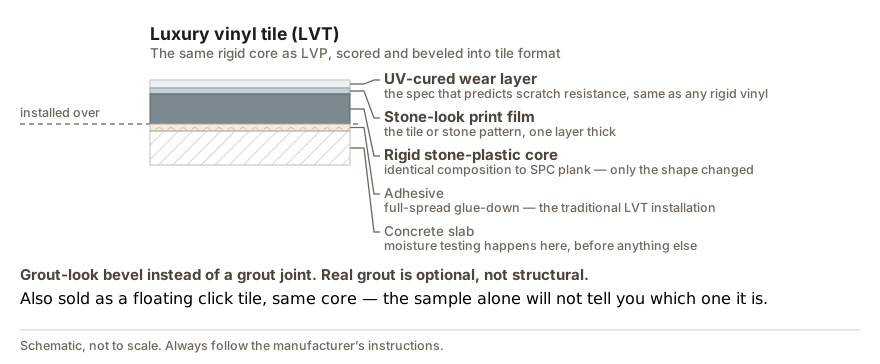
Inside Luxury Vinyl Tile (LVT)
The rigid-core version, beveled into tile format. Most LVT sold is the flexible glue-down build instead — same layers on a thin solid PVC body.Wear layer resists abrasion. Denting is a property of the core.
A format difference, not a material one. Tile modules with a beveled edge instead of plank profiles — and the same two cores as plank: flexible glue-down (most LVT) or rigid click (SPC). Wear-layer logic carries straight across.
Full-spread glue-down is the traditional LVT installation and still the majority of what's sold under that name — permanent, no expansion gap to manage, unforgiving of a bad slab. Floating click LVT is newer, DIY-friendlier, and needs the same expansion gap and flatness tolerance any rigid-core floating floor does. Confirm which one is actually being quoted; a sample board won't tell you.
Both are resilient tile, and that's where the similarity ends. VCT is a porous limestone-and-vinyl composite sealed with floor finish that has to be stripped and rewaxed on a schedule. LVT carries a factory UV-cured wear layer, the same technology as LVP, and is never waxed.
No thinset, no cement backer board or uncoupling membrane, and no grout to reseal — the bevel reads as a joint without being one. What it gives up is the resale value and the truly limitless format range real stone and porcelain carry.
Some product lines ship with a flexible polyurethane grout for the joints, closing most of the visual gap with real tile at the cost of extra labor and a genuine (if low-maintenance) joint to keep clean.
The spec sheet
Key specifications
Wear layer
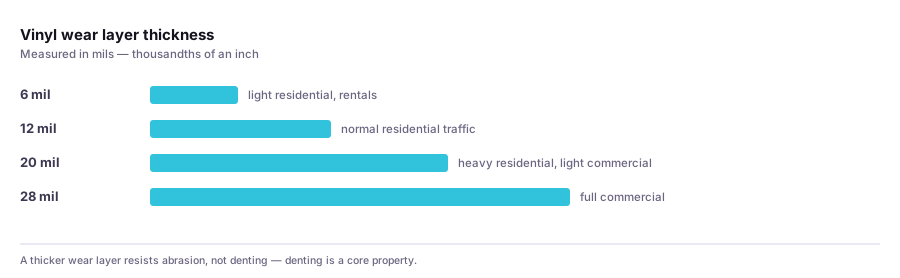
12–20 mil
Thickness
2–5 mm
Format
12"×24", 18"×18", plank-tile hybrids
Install
Glue-down (standard) or floating click (rigid-core)
Routine
Sweep or vacuum (beater bar off) regularly
Damp-mop with a pH-neutral vinyl cleaner — it is waterproof
Felt pads under furniture; wide non-marking casters on rolling chairs
Periodic / deep
No refinishing or waxing — the wear layer isn’t renewable, only replaceable
Use a manufacturer-approved scuff remover rather than a generic floor stripper
Never do this
Never use wax, polish or "mop and shine" products — there is nothing for them to bond to
Never use rubber-backed mats — vinyl reacts with rubber and stains permanently
Never flood-mop a glue-down installation; standing water finds the perimeter
Ask directly whether the quote is glue-down or floating click. Both are called LVT, both use the same core, and the installation isn't something you can tell from the sample in your hand.
Each feature paired with the benefit it delivers. A spec on its own tells you nothing about
whether it is worth paying for.
01
Two cores under one name
Most LVT is flexible glue-down tile on a solid PVC body, the same construction as flexible plank. A rigid-core click version on the SPC core exists too. Both are waterproof; only one floats.
02
Grout-look bevel without a grout joint's upkeep
Reads as tile from across the room. No sealing, no re-grouting, and nothing porous for a spill to sit in.
03
Two install paths on the same product category
Traditional full-spread glue-down, or a rigid-core floating click version — the choice most homeowners don’t know they are making.
04
Waterproof through the full body
Same immunity to water as SPC plank, so it goes in a bathroom or basement the same way — without a real tile job's substrate demands.
05
No wax cycle
Unlike VCT, the wear layer is a factory UV-cured finish, not floor wax. Nothing to strip, nothing to re-coat.
Before you buy
What to confirm on the quote
The specifications below decide how this floor performs. Ask for them in writing — a sample
board and a price per square foot do not tell you any of it.
Wear layer: confirm it is 12–20 mil
Thickness: confirm it is 2–5 mm
Format: confirm it is 12"×24", 18"×18", plank-tile hybrids
Install: confirm it is Glue-down (standard) or floating click (rigid-core)
Substrate: ask what preparation is included and what is excluded
Warranty: ask what is covered after year one, and whether labor is included
Attic stock: order about 5% extra and keep it — replacements bought later rarely match
Luxury Vinyl Tile (LVT) runs $5.50–$13.00 per square foot installed in 2026 — $2.50 to $7.00 for material and $3.00 to $6.00 for professional labor. Spread across an expected 15 to 25 year service life that works out near $0.46 per square foot per year. Regional variation of 20 to 40% is normal, and demolition, subfloor prep and trim are extra.
15 to 25 years, assuming it went into an appropriate room over a properly prepared substrate and gets the maintenance it needs. Ask directly whether the quote is glue-down or floating click. Both are called LVT, both use the same core, and the installation isn't something you can tell from the sample in your hand.
Yes — luxury vinyl tile is unaffected by water, which is why it works in bathrooms, laundries and below grade. Note that a waterproof material does not make a waterproof floor: water can still travel through seams to the subfloor beneath.
Sweep or vacuum (beater bar off) regularly. Damp-mop with a pH-neutral vinyl cleaner — it is waterproof. Critically: never use wax, polish or "mop and shine" products — there is nothing for them to bond to.
Alternatives
Compare Luxury Vinyl Tile (LVT) with the alternatives
Same family first, then products with a similar look from other families.