The natural luxury fiber — beautiful, breathable, expensive. Typical installed cost, durability,
where it works and how to care for it.
$8.00–$22.00 / sq ft installed20–40 year lifeHeavy trafficCommercial ratedTextile
$8.00–$22.00per sq ft
20–40 yrlife
Heavytraffic
The basics
What is Wool Carpet?
Wool carpet is carpet made from real sheep's wool — the same natural fiber used in wool sweaters, not a synthetic plastic like most carpet. The wool is spun into yarn and tufted into a backing to form the pile you walk on. It's naturally springy, breathable and fire-resistant, which is part of why it costs more than synthetic carpet.
Overview
Buys you time on a spill, punishes you for waiting too long
Wool has been the benchmark synthetic fibers get measured against for a century. Its scaled, crimped structure gives it natural resilience that just keeps springing back, and it's naturally flame-resistant without any added chemistry.
The lanolin in the fiber buys some time on a fresh spill, but wool is also highly hygroscopic — it absorbs and releases moisture from the air around it, which is exactly why a spill left too long stains where a synthetic fiber would simply have shed it. Wool is the most expensive mainstream fiber, and it's vulnerable to alkaline cleaners, moths and too much direct sun.
In real rooms
Wool carpet. Naturally flame-resistant, and it holds its appearance for decades because the fiber has a natural crimp that keeps springing back. Wool also absorbs moisture readily, which is exactly why it stains where a synthetic fiber would simply shed the spill.
What it costs
Installed cost per square foot
Material / sq ft$6.00–$18.00
Install labor / sq ft$2.00–$4.00
Total installed / sq ft$8.00–$22.00
Expected life20–40 yr$0.50/yr
How it rates
Performance profile
Durability
Water resistance
Comfort underfoot
Sound absorption
Environmental profile
Ease of maintenance
Four separate scores
Living with pets
Claw resistance
Accidents
Traction
Hair & dirt
Wool is usually specified as a loop, and a claw that catches a loop pulls a run that can't be repaired invisibly. If you want wool with a dog in the house, specify cut pile. Urine is also chemically hard on wool, and the alkaline cleaners used to treat it damage the fiber.
Wool insulates by nature, which works against a system trying to push heat up through it. Workable with a thin, radiant-rated pad; not the natural choice.
Stretched broadloom — tools run roughly $80–$180 to buy
A room in a day, if the stretch goes right the first time. The technique is identical to any broadloom carpet, but wool costs more to get wrong and is less forgiving of a rushed seam. Most wool jobs are worth hiring out for that reason alone.
Buyers prioritizing natural materials and indoor air quality
Where to think twice
Damp basements
Budget projects
Rooms with intense unfiltered sunlight
Homes with untreated moth issues
Advertisement
How it is built
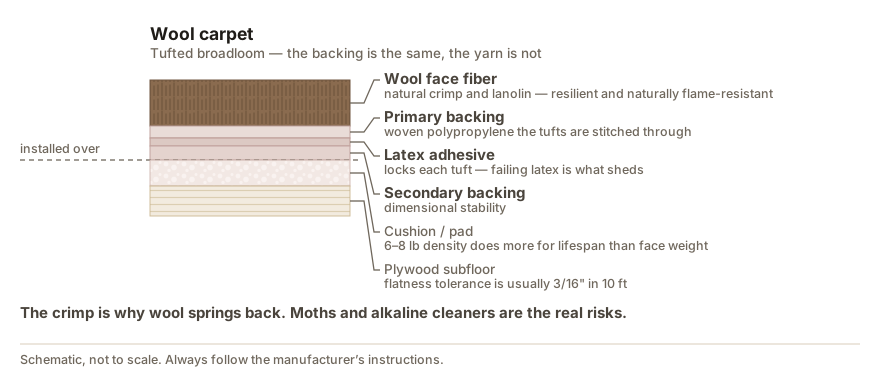
Inside Wool Carpet
The natural crimp is what springs back after furniture moves.
New Zealand wool (typically 32–37 micron) is the residential standard for carpet — coarser than apparel wool, which is what gives it bulk and resilience.
Wool self-extinguishes and has a high ignition threshold, which is why it appears in aviation and hospitality spec without added flame retardants.
Wool can absorb up to 30% of its weight in moisture without feeling wet, buffering indoor humidity swings.
80/20 wool-nylon is a common hospitality spec: most of wool's look and hand with a meaningful jump in abrasion resistance at a lower price.
Modern wool carpet is typically treated with a permanent moth-resist agent. Confirm this on any wool you specify.
The spec sheet
Key specifications
Origin
New Zealand, UK, Argentina
Warranty range
15–25 yrs (varies)
Blends
80/20 wool-nylon common
Certifications
Wools of New Zealand, GoodWeave
Routine
Vacuum 2–3× weekly — wool sheds loose fiber for the first several months, which is normal
Blot spills with cool water and a wool-safe (pH 5–8) spotter
Use window film or shades in strong direct sun
Periodic / deep
Professional extraction every 18–24 months by a technician experienced with wool
Dry cleaning or very-low-moisture methods preferred over saturating extraction
Never do this
Never use high-pH / alkaline detergents — they dissolve the fiber's protective scales
Budget for professional cleaning as a line item. Wool rewards proper maintenance with 30+ year service and punishes the wrong chemical instantly.
Each feature paired with the benefit it delivers. A spec on its own tells you nothing about
whether it is worth paying for.
01
Natural crimp and scale structure
Resilience without chemistry. Wool recovers from crushing better than any synthetic, which is why 30-year-old wool carpet still looks like carpet.
02
Lanolin content
Repels water-based spills long enough to blot them, giving you a genuine grace period that synthetics without a treatment don’t offer.
03
Inherent flame resistance
Self-extinguishes and ignites at a high threshold with no added flame retardants, which is why it appears in aviation and hospitality specifications.
04
Moisture regulation
Absorbs up to 30% of its weight in humidity without feeling damp, buffering indoor humidity swings that would otherwise stress wood floors and furniture.
05
Biodegradable and renewable
End-of-life disposal isn’t a landfill problem, and the raw material regrows on the sheep every year.
Before you buy
What to confirm on the quote
The specifications below decide how this floor performs. Ask for them in writing — a sample
board and a price per square foot do not tell you any of it.
Origin: confirm it is New Zealand, UK, Argentina
Warranty range: confirm it is 15–25 yrs (varies)
Blends: confirm it is 80/20 wool-nylon common
Certifications: confirm it is Wools of New Zealand, GoodWeave
Substrate: ask what preparation is included and what is excluded
Warranty: ask what is covered after year one, and whether labor is included
Attic stock: order about 5% extra and keep it — replacements bought later rarely match
Wool Carpet runs $8.00–$22.00 per square foot installed in 2026 — $6.00 to $18.00 for material and $2.00 to $4.00 for professional labor. Spread across an expected 20 to 40 year service life that works out near $0.50 per square foot per year. Regional variation of 20 to 40% is normal, and demolition, subfloor prep and trim are extra.
20 to 40 years, assuming it went into an appropriate room over a properly prepared substrate and gets the maintenance it needs. Budget for professional cleaning as a line item. Wool rewards proper maintenance with 30+ year service and punishes the wrong chemical instantly.
Stairs. Formal living and dining rooms. Executive offices, boardrooms, hospitality.
No. Standing water causes permanent damage. Damp basements
Vacuum 2–3× weekly — wool sheds loose fiber for the first several months, which is normal. Blot spills with cool water and a wool-safe (pH 5–8) spotter. Critically: never use high-ph / alkaline detergents — they dissolve the fiber's protective scales.
Alternatives
Compare Wool Carpet with the alternatives
Same family first, then products with a similar look from other families.