Foamed core: warmer, quieter and softer than SPC — and thicker. Typical installed cost, durability,
where it works and how to care for it.
$5.00–$13.00 / sq ft installed15–25 year lifeHeavy trafficWood-look, Stone & marble
$5.00–$13.00per sq ft
15–25 yrlife
Heavytraffic
The basics
What is Luxury Vinyl Plank — WPC (Wood-Plastic Core)?
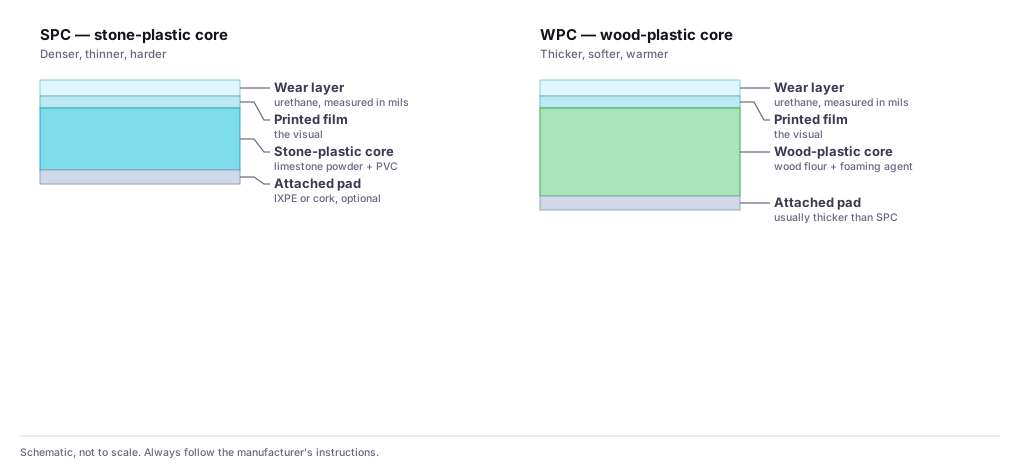
WPC stands for wood-plastic composite. It's built the same basic way as SPC vinyl plank — a rigid, waterproof core under a printed wood or stone layer — but the core is a foamed plastic-and-wood-flour blend instead of solid stone powder. That foam is what makes it feel warmer, softer and quieter underfoot than SPC, at the cost of denting more easily under something heavy.
Overview
Warmer and quieter than SPC, softer under a heavy load
WPC uses a foamed composite core containing wood flour and PVC. The air trapped in that foam makes the plank thicker, lighter, warmer to the touch and noticeably quieter than SPC. It's also more forgiving of small subfloor imperfections, thanks to that same foam.
The tradeoff is indentation resistance: a heavy point load — a refrigerator foot, a piano caster — can leave a permanent dimple. WPC is still fully waterproof, though; the "wood" in it is encapsulated flour, not actual lumber.
In real rooms
WPC vinyl plank. A foamed wood-plastic core — thicker, warmer and quieter underfoot than SPC, and more forgiving of a subfloor that is not perfectly flat. The same foam is why it dents more readily under a point load such as a furniture leg.
What it costs
Installed cost per square foot
Material / sq ft$3.00–$8.00
Install labor / sq ft$2.00–$5.00
Total installed / sq ft$5.00–$13.00
Expected life15–25 yr$0.45/yr
How it rates
Performance profile
Durability
Water resistance
Comfort underfoot
Sound absorption
Environmental profile
Ease of maintenance
Four separate scores
Living with pets
Claw resistance
Accidents
Traction
Hair & dirt
Warmer and quieter underfoot than SPC, which matters if the dog sleeps on it, but the foamed core dents more readily under a heavy dog and under furniture. Same wear layer rules apply.
Workable, but the foamed core that makes WPC warmer and quieter underfoot also makes it a worse conductor — the system has to work harder to deliver the same heat SPC would pass through. Manufacturer surface-temperature limit: about 85°F.
Floating click — tools run roughly $150–$400 to buy
A bedroom in a day; a whole floor over a long weekend. Same floating-click job as SPC, with a thicker, softer plank that's slightly more forgiving over minor subfloor irregularity.
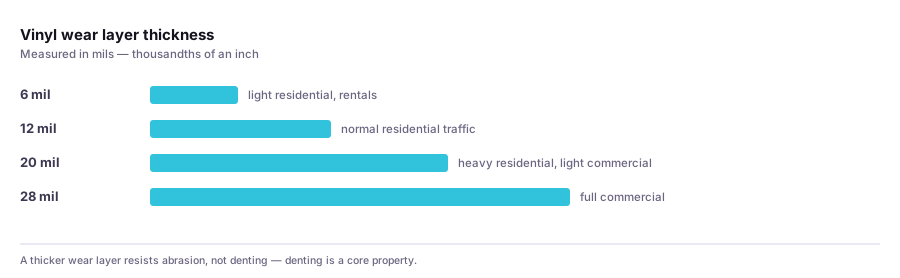
The core is the whole difference. Everything else in the stack is the same — and every core is PVC.Wear layer resists abrasion. Denting is a property of the core.
Air pockets reduce weight and thermal conductivity. WPC floors feel roughly 5–10 °F warmer to bare feet than SPC over the same slab.
Look for a static load / residual indentation number. WPC typically lags SPC here by a wide margin — the number, not the marketing, tells the story.
WPC with an attached pad commonly reaches IIC 60+ and STC 50+ in tested assemblies, which is why condo boards often accept it where SPC needs added underlayment.
All vinyl moves with temperature. WPC moves more than SPC. Follow expansion-gap requirements exactly and avoid uncontrolled direct sun.
The spec sheet
Key specifications
Wear layer
6–30 mil
Total thickness
5–8 mm
Waterproof
Yes
Acoustics
Best-in-class among rigid vinyl
Routine
Sweep and damp-mop with pH-neutral cleaner
Use the largest-diameter, softest casters you can on rolling furniture
Felt pads on every leg; use load-spreading cups under appliances
Periodic / deep
Replace damaged planks; there is no repair for a permanent indentation
Use a manufacturer-approved scuff remover for black heel marks
Check for seasonal gapping near vents and exterior doors — the foamed core moves more than SPC does
Never do this
Never use rubber-backed rugs
Never place unprotected heavy point loads directly on the surface
Never steam clean at high heat — it can soften the foam core
Choose WPC upstairs and in bedrooms for comfort and quiet; choose SPC downstairs and in kitchens for dent resistance. Many homes use both.
Each feature paired with the benefit it delivers. A spec on its own tells you nothing about
whether it is worth paying for.
01
Foamed wood-plastic core
Air pockets make it warmer to bare feet than SPC over the same slab, and noticeably quieter underfoot — the two things people notice first.
02
Thicker profile with attached pad
Bridges minor subfloor imperfections that would telegraph through a thin rigid plank, cutting floor-prep cost on an older house.
03
Tested acoustic assemblies
Commonly reaches IIC 60+ and STC 50+, which is what condo boards ask for before they approve hard surface over a neighbor.
04
Fully waterproof construction
Same immunity to water as SPC — the wood content is encapsulated flour, not lumber, so there is nothing for moisture to attack.
05
Softer underfoot than rigid core
Meaningfully more forgiving for standing and for dropped glassware, which matters in kitchens and second-floor bedrooms.
Before you buy
What to confirm on the quote
The specifications below decide how this floor performs. Ask for them in writing — a sample
board and a price per square foot do not tell you any of it.
Wear layer: confirm it is 6–30 mil
Total thickness: confirm it is 5–8 mm
Waterproof: confirm it is Yes
Acoustics: confirm it is Best-in-class among rigid vinyl
Substrate: ask what preparation is included and what is excluded
Warranty: ask what is covered after year one, and whether labor is included
Attic stock: order about 5% extra and keep it — replacements bought later rarely match
Luxury Vinyl Plank — WPC (Wood-Plastic Core) runs $5.00–$13.00 per square foot installed in 2026 — $3.00 to $8.00 for material and $2.00 to $5.00 for professional labor. Spread across an expected 15 to 25 year service life that works out near $0.45 per square foot per year. Regional variation of 20 to 40% is normal, and demolition, subfloor prep and trim are extra.
15 to 25 years, assuming it went into an appropriate room over a properly prepared substrate and gets the maintenance it needs. Choose WPC upstairs and in bedrooms for comfort and quiet; choose SPC downstairs and in kitchens for dent resistance. Many homes use both.
Basement (below grade), Bedroom, Living / Family Room, Home Office. Bedrooms, living rooms and second floors. Homes wanting quieter, warmer waterproof floors.
Sunroom / Four-Season Room. Rooms with very heavy point loads. Commercial and retail traffic.
Yes — WPC vinyl plank is unaffected by water, which is why it works in bathrooms, laundries and below grade. Note that a waterproof material does not make a waterproof floor: water can still travel through seams to the subfloor beneath.
Sweep and damp-mop with pH-neutral cleaner. Use the largest-diameter, softest casters you can on rolling furniture. Critically: never use rubber-backed rugs.
Alternatives
Compare Luxury Vinyl Plank — WPC (Wood-Plastic Core) with the alternatives
Same family first, then products with a similar look from other families.