The performance benchmark for cut-pile carpet. Typical installed cost, durability,
where it works and how to care for it.
$4.00–$10.00 / sq ft installed10–20 year lifeHeavy trafficCommercial ratedTextile
$4.00–$10.00per sq ft
10–20 yrlife
Heavytraffic
The basics
What is Nylon Carpet?
Nylon carpet is carpet woven from nylon — a strong, springy plastic fiber, the same family of material used to make rope and pantyhose. Millions of these fibers are looped or cut and punched into a backing to create the soft pile you actually walk on. It's the toughest of the common carpet fibers, which is also why it usually costs more than the others.
Overview
Bounces back from crushing, cleans up with harsher chemistry
Nylon (polyamide) is the toughest carpet fiber you can buy — it bounces back from being crushed better than anything else soft, which is why it's the one that survives a hallway or a staircase without matting flat. Type 6,6 nylon is denser and a bit more stain- and abrasion-resistant than Type 6; you won't go wrong with either.
Nearly all quality nylon today is solution-dyed, meaning the color runs all the way through the fiber instead of sitting on top — so you can clean it with far harsher chemistry than a piece-dyed carpet can handle.
In real rooms
Nylon carpet. The fiber recovers its shape after being crushed better than anything else soft, which is why it is the one that survives a hallway or a staircase. Solution-dyed nylon carries its color through the fiber, so it can be cleaned with far harsher chemistry than a piece-dyed carpet tolerates.
What it costs
Installed cost per square foot
Material / sq ft$2.50–$7.00
Install labor / sq ft$1.50–$3.00
Total installed / sq ft$4.00–$10.00
Expected life10–20 yr$0.47/yr
How it rates
Performance profile
Durability
Water resistance
Comfort underfoot
Sound absorption
Environmental profile
Ease of maintenance
Four separate scores
Living with pets
Claw resistance
Accidents
Traction
Hair & dirt
Nylon takes claw traffic better than any other fiber and springs back from crushing. None of that helps with accidents: urine goes through the carpet into the pad and then the subfloor, and by the time you can smell it the pad is already the problem.
Carpet and its pad insulate against the exact thing you're paying the system to do. If you must, use a low, dense pile over a thin radiant-rated pad — not the plush 8 lb rebond recommended everywhere else on this page.
Stretched broadloom — tools run roughly $80–$180 to buy
A room in a day with the right tools — considerably longer, and shorter-lived, without them. A power stretcher is mandatory, not optional — CRI 104/105 calls for 1–1.5% stretch across both directions. A knee kicker alone is the most common cause of ripples within a few months.
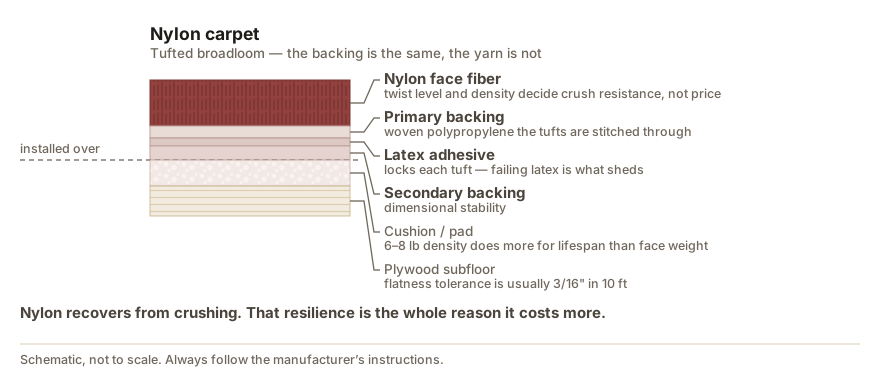
Twist and density decide how long it looks new. Face weight alone does not.
Type 6,6 tests roughly 20% higher in tensile strength and about 12% higher in surface hardness, and costs 10–15% more. In practice the gap has narrowed a great deal: modern fluorochemical and acid-dye-resistor treatments are applied to both, and experienced cleaners often describe current products as difficult to tell apart. Type 6 dyes more readily and depolymerizes for recycling. Both outperform every non-nylon fiber.
Color is added to the liquid polymer before the fiber is extruded, so it runs all the way through. Result: essentially bleach-proof and fade-proof. Costs more than piece-dyed but is the single best durability upgrade you can buy.
Face weight (oz/yd²) is only half the story. Average pile yarn density = face weight × 36 ÷ pile height, in oz/yd³. Typical results land between about 1,000 and 7,000; the Carpet and Rug Institute recommends 5,000 or higher for extra-heavy traffic. A dense 40 oz beats a fluffy 55 oz.
How tightly the yarn is twisted, and whether it's heat-set. Higher twist resists the "frizzing" that makes traffic lanes look dirty. Look for 5+ turns per inch on frieze.
A separate purchase that determines how long the carpet lasts. 8 lb density, 7/16" thick is the residential standard. Too-thick pad voids warranties and causes seam failure.
The spec sheet
Key specifications
Typical face weight
35–60 oz/yd²
Warranty range
10–25 yrs texture retention
Roll width
12 ft (some 15 ft)
Reclaim
Widely recycled — nylon 6 is depolymerizable
Routine
Vacuum high-traffic lanes daily-to-weekly with a beater bar set to the correct pile height
Blot spills immediately — never rub, which drives soil into the backing
Rotate furniture periodically to even out crush
Use walk-off mats at every exterior door
Periodic / deep
Hot water extraction (steam) every 12–18 months, done by an IICRC-certified tech
Interim encapsulation cleaning in commercial settings between deep extractions
Dry within 6–12 hours to prevent microbial growth
Never do this
Never use bleach or high-pH cleaners on non-solution-dyed nylon
Never over-wet — saturating the backing causes delamination and odor
Never apply grocery-store "carpet fresh" powders; they clog the backing
If you buy one upgrade, make it solution-dyed nylon over a quality 8 lb pad. It costs roughly 15% more and routinely doubles usable life.
Each feature paired with the benefit it delivers. A spec on its own tells you nothing about
whether it is worth paying for.
01
Type 6,6 or solution-dyed fiber
Color runs through the strand instead of sitting on it, so bleach spills and years of sunlight can’t pull it out. This is the single upgrade that most reliably doubles usable life.
02
High twist level, heat-set
The yarn holds its shape instead of unravelling into fuzz. Traffic lanes stay looking like carpet rather than turning into a permanent gray path to the sofa.
03
Molecular memory in the fiber
Crushed pile springs back when heat and moisture are applied during cleaning. A nylon floor recovers from a heavy sideboard; polyester keeps the dent.
04
Density above 5,000 oz/yd³
Tufts support each other so foot pressure spreads instead of splaying the pile. Density predicts appearance retention better than any other number on the label.
05
Sound absorption across the whole spectrum
Cuts both footfall heard below and echo within the room. In a condo it is often the cheapest way to satisfy an acoustic requirement in the bylaws.
Before you buy
What to confirm on the quote
The specifications below decide how this floor performs. Ask for them in writing — a sample
board and a price per square foot do not tell you any of it.
Typical face weight: confirm it is 35–60 oz/yd²
Warranty range: confirm it is 10–25 yrs texture retention
Roll width: confirm it is 12 ft (some 15 ft)
Reclaim: confirm it is Widely recycled — nylon 6 is depolymerizable
Substrate: ask what preparation is included and what is excluded
Warranty: ask what is covered after year one, and whether labor is included
Attic stock: order about 5% extra and keep it — replacements bought later rarely match
Nylon Carpet runs $4.00–$10.00 per square foot installed in 2026 — $2.50 to $7.00 for material and $1.50 to $3.00 for professional labor. Spread across an expected 10 to 20 year service life that works out near $0.47 per square foot per year. Regional variation of 20 to 40% is normal, and demolition, subfloor prep and trim are extra.
10 to 20 years, assuming it went into an appropriate room over a properly prepared substrate and gets the maintenance it needs. If you buy one upgrade, make it solution-dyed nylon over a quality 8 lb pad. It costs roughly 15% more and routinely doubles usable life.
Bedroom, Living / Family Room, Stairs, Home Office. Bedrooms and family rooms. Stairs and hallways.
Kitchen, Full Bathroom, Basement (below grade), Laundry Room, Garage / Workshop. Bathrooms and laundry rooms. Basements with moisture history.
No. Standing water causes permanent damage. Bathrooms and laundry rooms
Vacuum high-traffic lanes daily-to-weekly with a beater bar set to the correct pile height. Blot spills immediately — never rub, which drives soil into the backing. Critically: never use bleach or high-ph cleaners on non-solution-dyed nylon.
Alternatives
Compare Nylon Carpet with the alternatives
Same family first, then products with a similar look from other families.