Real wood veneer on a dimensionally stable core. Typical installed cost, durability,
where it works and how to care for it.
$9.00–$19.00 / sq ft installed20–50 year lifeHeavy trafficCommercial ratedWood-look
$9.00–$19.00per sq ft
20–50 yrlife
Heavytraffic
The basics
What is Engineered Hardwood?
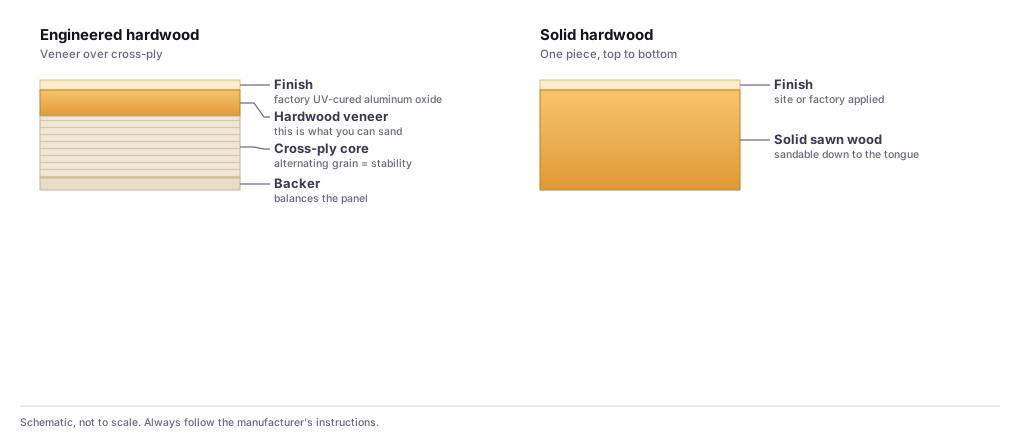
Engineered hardwood is real wood on top, but instead of being solid wood all the way through, it's a thin layer of real hardwood glued onto a plywood-like core made of several thinner layers. From the surface it looks and feels just like solid wood. That layered core underneath is what lets it go over concrete slabs and heated floors that solid wood can't handle.
Overview
The wear-layer number that decides everything
Engineered hardwood bonds a genuine hardwood wear layer to a cross-ply or HDF core. Because the core layers run perpendicular to each other, the plank resists the seasonal expansion that limits solid wood — which means it can go over concrete slabs, below grade, and over radiant heat.
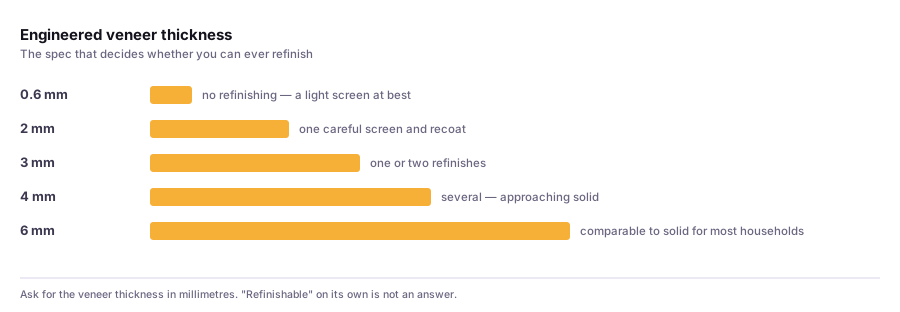
Quality varies enormously here, and it comes down almost entirely to wear-layer thickness: a 4–6 mm sawn veneer can be refinished three or four times and looks identical to solid wood, while a sub-millimeter peeled veneer can't be sanded at all.
In real rooms
Engineered hardwood. A genuine hardwood wear layer over a cross-laminated core, which makes it far more dimensionally stable than solid timber. That stability is why it can go over a slab or above radiant heat, and the wear layer thickness is what decides whether it can ever be refinished.
What it costs
Installed cost per square foot
Material / sq ft$6.00–$12.00
Install labor / sq ft$3.00–$7.00
Total installed / sq ft$9.00–$19.00
Expected life20–50 yr$0.40/yr
How it rates
Performance profile
Durability
Water resistance
Comfort underfoot
Sound absorption
Environmental profile
Ease of maintenance
Four separate scores
Living with pets
Claw resistance
Accidents
Traction
Hair & dirt
Scratches like solid wood but has far less to give back. A 2 mm veneer buys one refinish if you are lucky, so claw damage accumulates permanently. Check the wear layer thickness before assuming you can sand it.
The cross-ply or HDF core resists the cupping and gapping that would sideline solid wood. Keep the surface under 80–85°F and ramp temperature changes slowly, and it is the wood category's radiant-safe choice. Manufacturer surface-temperature limit: about 85°F.
Floating click — tools run roughly $150–$400 to buy
A bedroom in a day; a whole floor over a long weekend. Get the expansion gap right with spacers and a pull bar, and most of the rest is patience. A moisture meter isn't optional over a slab.
Spaces expecting multiple refinishes over 50+ years
Advertisement
How it is built
Inside Engineered Hardwood
Only the veneer can be sanded. That is what limits refinishing, not the total thickness.Ask for this number in millimeters before anything else.
The single most important spec, because each refinish removes roughly 0.5–1 mm. Under 1 mm: not refinishable, expect 15–20 yrs. 2 mm: one to two refinishes. 3 mm: two to three. 4 mm: three to four, 50+ yr service life. 6 mm: refinishable about as often as solid wood.
Sawn-face veneer looks like solid wood grain. Rotary-peeled is unwound from the log like a paper towel and produces a repeating, plywood-like figure. Sawn costs more and looks better.
Baltic birch or multi-ply hardwood plywood is the premium core. HDF core is stiffer and flatter but swells permanently if water reaches it. Softwood ply is the budget option.
Glue-down (best acoustics and feel, most permanent), floating click-lock (fastest, DIY-viable, hollow sound without underlayment), or nail-down over wood subfloor.
Engineered is the only wood category generally warrantied over radiant. Keep surface temperature below 80–85 °F and ramp temperature changes slowly.
The spec sheet
Key specifications
Wear layer
under 1 mm to 6 mm (buy 3 mm+)
Total thickness
3/8"–3/4"
Widths
5"–9" common
Below grade
Yes, with proper vapor control
Routine
Dust-mop or vacuum on hard-floor setting
Damp-mop with manufacturer-approved wood cleaner
Hold indoor humidity at 30–50% and 60–80 °F
Protective pads on all furniture
Periodic / deep
Screen-and-recoat if the wear layer is 3 mm+
Refinish only within the manufacturer's stated allowance — sanding through a veneer is unrepairable
Never do this
Never steam-mop
Never let water stand at the seams, especially with an HDF core
Never assume it is waterproof — "water-resistant" engineered still fails under standing water
Ignore the price tag and read the wear-layer spec. Two floors at the same price can differ by 25 years of service life.
Each feature paired with the benefit it delivers. A spec on its own tells you nothing about
whether it is worth paying for.
01
Cross-ply or HDF core
Layers run perpendicular, so the plank barely moves with season. That single fact is what lets real wood go over a slab, below grade and over radiant heat.
02
Sawn-face wear layer at 3 mm or more
Indistinguishable from solid wood at the surface, and thick enough to sand two or three times across a 40-year life.
03
Wide plank without the movement risk
The 7- and 9-inch boards that define current interiors, without the winter gapping those widths cause in solid timber.
04
Choice of glue-down, floating or nail
Glue-down for the most solid feel, floating for speed and DIY, nail-down over wood joists. One product, three site conditions.
05
Factory aluminum-oxide finish
A UV-cured coating harder than anything applied on site, with a warranty behind it and no fumes or cure time in your house.
Before you buy
What to confirm on the quote
The specifications below decide how this floor performs. Ask for them in writing — a sample
board and a price per square foot do not tell you any of it.
Wear layer: confirm it is under 1 mm to 6 mm (buy 3 mm+)
Total thickness: confirm it is 3/8"–3/4"
Widths: confirm it is 5"–9" common
Below grade: confirm it is Yes, with proper vapor control
Substrate: ask what preparation is included and what is excluded
Warranty: ask what is covered after year one, and whether labor is included
Attic stock: order about 5% extra and keep it — replacements bought later rarely match
Engineered Hardwood runs $9.00–$19.00 per square foot installed in 2026 — $6.00 to $12.00 for material and $3.00 to $7.00 for professional labor. Spread across an expected 20 to 50 year service life that works out near $0.40 per square foot per year. Regional variation of 20 to 40% is normal, and demolition, subfloor prep and trim are extra.
20 to 50 years, assuming it went into an appropriate room over a properly prepared substrate and gets the maintenance it needs. Ignore the price tag and read the wear-layer spec. Two floors at the same price can differ by 25 years of service life.
Bedroom, Living / Family Room, Home Office. Concrete slabs and below-grade living space. Over radiant floor heating.
Full Bathroom, Laundry Room, Garage / Workshop, Sunroom / Four-Season Room. Bathrooms and standing-water areas. Any project buying on price alone (thin veneers).
No. Standing water causes permanent damage. Bathrooms and standing-water areas
Dust-mop or vacuum on hard-floor setting. Damp-mop with manufacturer-approved wood cleaner. Critically: never steam-mop.
Alternatives
Compare Engineered Hardwood with the alternatives
Same family first, then products with a similar look from other families.