Softer, cheaper, easier to cut — best kept indoors and dry-ish. Typical installed cost, durability,
where it works and how to care for it.
$6.00–$18.00 / sq ft installed25–50 year lifeModerate trafficStone & marble, Solid & pattern
$6.00–$18.00per sq ft
25–50 yrlife
Moderatetraffic
The basics
What is Ceramic Tile?
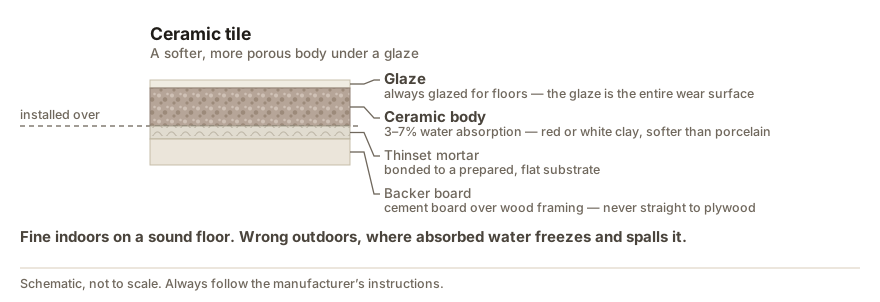
Ceramic tile is fired clay, like porcelain, but made from a coarser clay and fired at a lower temperature — think of it as porcelain's less-baked cousin. That softer firing makes it easier and cheaper to cut, which is why it's a popular DIY choice. The trade-off is that it soaks up a little more water and isn't safe anywhere it could freeze.
Overview
Everything here comes down to one freeze-thaw line
Standard (non-porcelain) ceramic uses a coarser clay body fired at a lower temperature, giving it water absorption above 0.5% and often in the 3–7% range, so it chips down to a paler body underneath the glaze. It's softer, lighter and dramatically easier to cut and drill than porcelain, which makes it friendlier to DIY installation and cheaper to install.
The trade-offs are real, though: it's not frost-proof, so it's fine indoors and unreliable anywhere that freezes — and that's most of the ceramic-versus-porcelain decision, right there. For walls and light-duty residential floors, it's an excellent value.
In real rooms
Ceramic tile. Fired at a lower temperature from coarser clay than porcelain, so it absorbs more water and chips to a paler body underneath the glaze. That is fine indoors and unreliable anywhere that freezes, which is the whole of the ceramic-versus-porcelain decision.
What it costs
Installed cost per square foot
Material / sq ft$1.00–$7.00
Install labor / sq ft$5.00–$11.00
Total installed / sq ft$6.00–$18.00
Expected life25–50 yr$0.32/yr
How it rates
Performance profile
Durability
Water resistance
Comfort underfoot
Sound absorption
Environmental profile
Ease of maintenance
Four separate scores
Living with pets
Claw resistance
Accidents
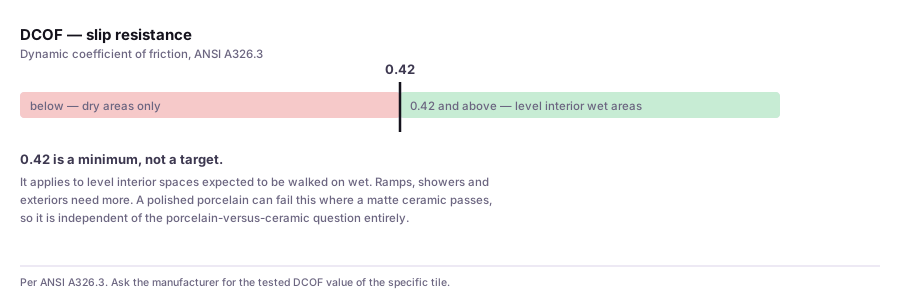
Traction
Hair & dirt
A softer glaze than porcelain, so claws can dull it over time in a busy run. Same grout caveat, same slip caution — and ceramic is more likely to be sold in a gloss finish, which is the worst case for traction.
Conducts nearly as well as porcelain and carries the same lack of a practical temperature ceiling — an excellent, inexpensive match for a radiant system.
A bathroom over a weekend if the substrate is sound. A standard tile cutter handles most ceramic cuts, which is what makes it more approachable than porcelain. The substrate prep still decides whether it holds.
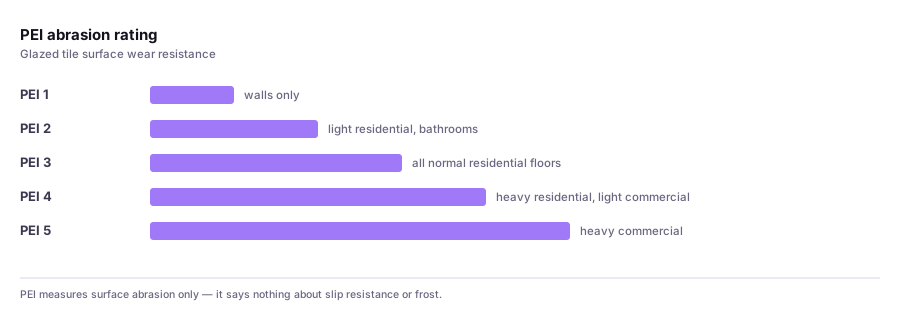
The glaze is the whole wear surface. There is nothing under it to fall back on.PEI covers surface abrasion only — not slip, not frost.0.42 is a floor, not a target. Ramps and showers need more.
Non-vitreous (>7%), semi-vitreous (3–7%), vitreous (0.5–3%). Porcelain is impervious (≤0.5%). Absorption is what determines freeze-thaw survival.
The glaze carries the wear rating. Once it wears through in a traffic lane, the exposed body shows and can't be restored.
Ceramic cuts cleanly on a basic wet saw and drills without diamond bits — a genuine advantage for a first-time tiler.
Roughly 15–25% lighter than porcelain of the same size, which matters on walls and in upper-floor loading calculations.
The spec sheet
Key specifications
Water absorption
0.5–7%+
Frost-proof
No
PEI
Typically Class 1–3
Best use
Walls, light-duty floors
Routine
Sweep and damp-mop with neutral cleaner
Keep grout sealed in wet areas
Wipe standing water in bathrooms
Periodic / deep
Grout cleaning and resealing every 1–2 years
Replace chipped tiles from attic stock — glaze chips can’t be repaired invisibly
If the space ever gets wet, freezes, or sees real traffic, the porcelain upgrade costs a little more in material and nothing extra in labor. Take it.
Each feature paired with the benefit it delivers. A spec on its own tells you nothing about
whether it is worth paying for.
01
Softer clay body
Cuts cleanly on a basic wet saw and drills without diamond bits. A first-time tiler can produce a good result, which is rarely true of porcelain.
02
Lower material cost than porcelain
Frees budget for the parts that actually determine success — substrate prep, uncoupling membrane and a skilled setter.
03
Lighter weight
Roughly 15 to 25% lighter than porcelain of the same size, which matters on walls and in upper-floor loading.
04
Wide glaze and format range
The largest decorative selection in tile, including handmade and crackle looks that aren’t made in porcelain.
05
Proven in dry interior service
In a low-traffic bathroom or a backsplash, the extra performance of porcelain buys nothing you will ever use.
Before you buy
What to confirm on the quote
The specifications below decide how this floor performs. Ask for them in writing — a sample
board and a price per square foot do not tell you any of it.
Water absorption: confirm it is 0.5–7%+
Frost-proof: confirm it is No
PEI: confirm it is Typically Class 1–3
Best use: confirm it is Walls, light-duty floors
Substrate: ask what preparation is included and what is excluded
Warranty: ask what is covered after year one, and whether labor is included
Attic stock: order about 5% extra and keep it — replacements bought later rarely match
Ceramic Tile runs $6.00–$18.00 per square foot installed in 2026 — $1.00 to $7.00 for material and $5.00 to $11.00 for professional labor. Spread across an expected 25 to 50 year service life that works out near $0.32 per square foot per year. Regional variation of 20 to 40% is normal, and demolition, subfloor prep and trim are extra.
25 to 50 years, assuming it went into an appropriate room over a properly prepared substrate and gets the maintenance it needs. If the space ever gets wet, freezes, or sees real traffic, the porcelain upgrade costs a little more in material and nothing extra in labor. Take it.
It tolerates water well but has a vulnerability, usually at the seams or the backing. Fine for splashes, not for standing water without care.
Sweep and damp-mop with neutral cleaner. Keep grout sealed in wet areas. Critically: never use acidic cleaners on cement grout.
Alternatives
Compare Ceramic Tile with the alternatives
Same family first, then products with a similar look from other families.