Stone-composite core: 100% waterproof and dimensionally rock-steady. Typical installed cost, durability,
where it works and how to care for it.
$4.00–$11.00 / sq ft installed15–25 year lifeExtreme trafficCommercial ratedWood-look, Stone & marble, Concrete look
$4.00–$11.00per sq ft
15–25 yrlife
Extremetraffic
The basics
What is Luxury Vinyl Plank — SPC (Rigid Core)?
SPC stands for stone-plastic composite. It's vinyl plank flooring built around a rigid core made from crushed limestone mixed with plastic, topped with a printed layer that looks like wood, stone or tile. Because that core has no wood or paper in it anywhere, it can't swell or rot from water — you can mop it without a second thought.
Overview
Impervious to water, honest about feeling hard underfoot
SPC stands for stone-plastic composite: limestone powder blended with PVC and stabilizers, extruded into a dense, rigid core. Because the core has no organic material in it, it can't swell, rot, or support mold, and it barely moves with temperature — which is why it stays flat in a sunroom or over a slab where other floors won't, and why SPC is the default recommendation for kitchens, baths, basements and rental properties.
It's denser and thinner than WPC, though, so it telegraphs subfloor imperfections and feels harder — and can sound a bit hollow underfoot unless it carries an attached acoustic pad.
In real rooms
SPC rigid core vinyl plank. A dense limestone-and-PVC core that barely moves with temperature, so it stays flat in a sunroom or over a slab where other floors will not. The trade is underfoot: it is hard and can sound hollow unless it carries an attached pad.
What it costs
Installed cost per square foot
Material / sq ft$2.00–$6.00
Install labor / sq ft$2.00–$5.00
Total installed / sq ft$4.00–$11.00
Expected life15–25 yr$0.38/yr
How it rates
Performance profile
Durability
Water resistance
Comfort underfoot
Sound absorption
Environmental profile
Ease of maintenance
Four separate scores
Living with pets
Claw resistance
Accidents
Traction
Hair & dirt
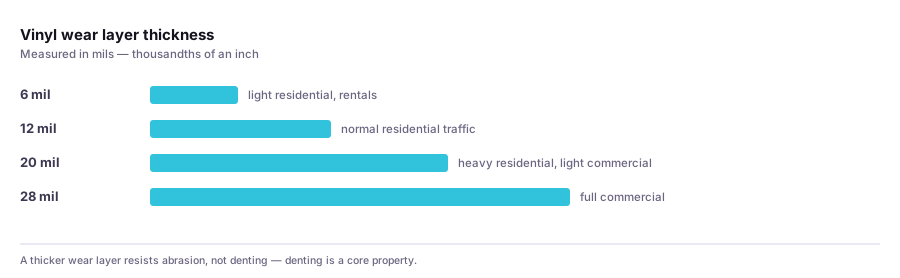
The default answer for dogs, and mostly deserved: waterproof core, textured surface with real grip, and hair sweeps straight off. Specify 20 mil wear layer, not 6 or 12 — the thin residential tiers scratch, and that's where most disappointment with LVP comes from.
The dense stone-plastic core conducts well and is a common pairing with radiant systems. Stay under the manufacturer's surface-temperature limit, typically 80–85°F, to avoid softening or indentation. Manufacturer surface-temperature limit: about 85°F.
Floating click — tools run roughly $150–$400 to buy
A bedroom in a day; a whole floor over a long weekend. A competent first-timer does this well. Spacers for the expansion gap and a pull bar for the last row are the two tools people skip and then regret.
Where Luxury Vinyl Plank — SPC (Rigid Core) works well
Kitchens, bathrooms, laundry, mudrooms
Basements and below-grade slabs
Rentals, flips and property management
Homes with pets and children
Retail, restaurant and light commercial
Where to think twice
Sunrooms with extreme direct heat (some products)
Spaces wanting genuine wood resale value
Rooms where underfoot softness is a priority
Advertisement
How it is built
Inside Luxury Vinyl Plank — SPC (Rigid Core)
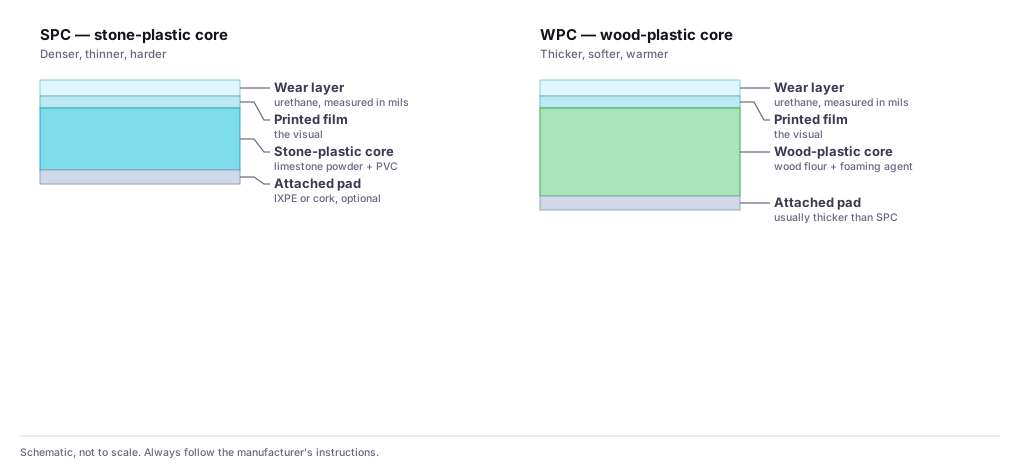
The core is the whole difference. Everything else in the stack is the same — and every core is PVC.Wear layer resists abrasion. Denting is a property of the core.
The clear top film — the durability spec that matters most. 6 mil: light residential. 12 mil: busy homes and pets. 20–30 mil: commercial. 6 mil and 20 mil products can look identical in the box.
SPC is stone-filled, rigid, thin, dent-resistant and cheaper. WPC is foamed and warmer, softer and quieter, but dents more easily under point loads like refrigerator legs. The third core is flexible: solid PVC with nothing mixed in, glued down rather than clicked — the original LVP and still the commercial standard.
IXPE or cork pad bonded to the plank. Adds meaningful acoustic dampening and comfort, and saves an install step, but hides less subfloor unevenness than people expect.
Aluminum-oxide or ceramic-bead additives in the top coat raise scratch resistance substantially. Ask specifically whether the wear layer is enhanced.
Angle-angle, angle-tap and drop-lock. Quality of the milling matters more than the brand — a poorly milled click joint will peak and separate.
Reputable current products are phthalate-free and FloorScore certified for indoor air quality. Cheap imports frequently aren't — ask for documentation.
The spec sheet
Key specifications
Wear layer
6–30 mil
Total thickness
4–8 mm
Waterproof
Yes — core and surface
Install
Floating click, glue-down commercial
Routine
Sweep or vacuum (beater bar off) regularly
Damp-mop with a pH-neutral vinyl cleaner as often as you like — it is waterproof
Felt pads under furniture; wide non-marking casters on rolling chairs
Walk-off mats at doors to trap abrasive grit
Periodic / deep
No refinishing possible; damaged planks in a floating install can be replaced
Use a manufacturer-approved scuff remover for black heel marks
Never do this
Never use rubber-backed mats — vinyl reacts with rubber and stains permanently
Never use abrasive pads, bleach, or "mop and shine" wax products
Never drag appliances across it without hardboard protection
Wear layer is the whole ballgame. 12 mil minimum for a family home, 20 mil for anything commercial. Below 8 mil is a rental-grade product.
Each feature paired with the benefit it delivers. A spec on its own tells you nothing about
whether it is worth paying for.
01
Limestone-and-PVC extruded core
No organic content whatsoever, so it can’t swell, rot or feed mold. A burst supply line is a mopping job, not a replacement job.
02
20 mil wear layer available
Commercial-grade abrasion resistance in a residential product. The spec that decides whether a floor looks new in year eight or tired in year three.
03
Extreme dimensional stability
The rigid core barely reacts to temperature, so it can run continuously from a sunny kitchen through to a north-facing hall without transition strips.
04
Ceramic-bead or enhanced top coat
Raises scratch resistance sharply — the practical difference between a floor that shows every claw mark and one that doesn’t.
05
Angle-tap click installation over most substrates
Goes over existing tile, plywood or a flat slab with no adhesive, so an occupied house can be floored room by room.
Before you buy
What to confirm on the quote
The specifications below decide how this floor performs. Ask for them in writing — a sample
board and a price per square foot do not tell you any of it.
Wear layer: confirm it is 6–30 mil
Total thickness: confirm it is 4–8 mm
Waterproof: confirm it is Yes — core and surface
Install: confirm it is Floating click, glue-down commercial
Substrate: ask what preparation is included and what is excluded
Warranty: ask what is covered after year one, and whether labor is included
Attic stock: order about 5% extra and keep it — replacements bought later rarely match
Luxury Vinyl Plank — SPC (Rigid Core) runs $4.00–$11.00 per square foot installed in 2026 — $2.00 to $6.00 for material and $2.00 to $5.00 for professional labor. Spread across an expected 15 to 25 year service life that works out near $0.38 per square foot per year. Regional variation of 20 to 40% is normal, and demolition, subfloor prep and trim are extra.
15 to 25 years, assuming it went into an appropriate room over a properly prepared substrate and gets the maintenance it needs. Wear layer is the whole ballgame. 12 mil minimum for a family home, 20 mil for anything commercial. Below 8 mil is a rental-grade product.
Kitchen, Full Bathroom, Basement (below grade), Entry / Mudroom, Laundry Room, Home Office, Home Gym. Kitchens, bathrooms, laundry, mudrooms. Basements and below-grade slabs.
Yes — SPC vinyl plank is unaffected by water, which is why it works in bathrooms, laundries and below grade. Note that a waterproof material does not make a waterproof floor: water can still travel through seams to the subfloor beneath.
Sweep or vacuum (beater bar off) regularly. Damp-mop with a pH-neutral vinyl cleaner as often as you like — it is waterproof. Critically: never use rubber-backed mats — vinyl reacts with rubber and stains permanently.
Alternatives
Compare Luxury Vinyl Plank — SPC (Rigid Core) with the alternatives
Same family first, then products with a similar look from other families.