Densest, hardest, most water-resistant mainstream floor — and the best wood-look plank made. Typical installed cost, durability,
where it works and how to care for it.
$8.00–$29.00 / sq ft installed50–100 year lifeExtreme trafficCommercial ratedWood-look, Stone & marble, Concrete look, Solid & pattern
$8.00–$29.00per sq ft
50–100 yrlife
Extremetraffic
The basics
What is Porcelain Tile?
Porcelain tile is a type of ceramic tile made from fine clay, fired at a very high temperature until it becomes extremely dense and hard — closer to glass than pottery. That intense firing is what keeps it from absorbing water, so it can go anywhere from a bathroom floor to an outdoor patio without cracking from freezing. It's also the tile most often printed to convincingly look like wood or stone.
Overview
About as close to a permanent floor as money buys
Porcelain is ceramic fired at a higher temperature from finer clay, which gives it water absorption at or below 0.5% — dense enough to be frost-proof and effectively impervious. Modern digital inkjet printing has made porcelain the most visually versatile category on the market: convincing wood-look planks, marble-look slabs with veining that runs through the body at a price well under the natural stone they imitate, and concrete-look large format.
It's about as close to a permanent floor as you can buy, at the cost of the highest installed price, an unforgiving hard surface, and grout that needs some attention.
In real rooms
Stone-look porcelain. The marbling is a printed surface layer over a fired clay body — which is why it lands well under the price of the travertine it imitates, absorbs almost no water, and can go in a bathroom or a basement where the real thing would need sealing.
What it costs
Installed cost per square foot
Material / sq ft$2.00–$15.00
Install labor / sq ft$6.00–$14.00
Total installed / sq ft$8.00–$29.00
Expected life50–100 yr$0.25/yr
How it rates
Performance profile
Durability
Water resistance
Comfort underfoot
Sound absorption
Environmental profile
Ease of maintenance
Four separate scores
Living with pets
Claw resistance
Accidents
Traction
Hair & dirt
Nothing a dog can do will mark it, and the tile itself is impervious. Two cautions: the grout is the weak point for accidents, so use epoxy grout in a pet household, and a polished finish is genuinely slippery for an older or heavy dog. Ask for the DCOF figure and specify a textured surface.
The best conductor of any floor on this site. There is no practical temperature ceiling to worry about, which is why a heated porcelain bathroom floor is the classic pairing.
A bathroom over a weekend if the substrate is sound; add a day if it isn’t. The tiling itself is learnable, and a wet saw is worth the rental for porcelain rather than a snap cutter. The substrate — not the tile work — is where DIY tile jobs fail.
Upper floors without adequate deflection (L/360 min)
Tight budgets — labor is the largest line item
Advertisement
How it is built
Inside Porcelain Tile
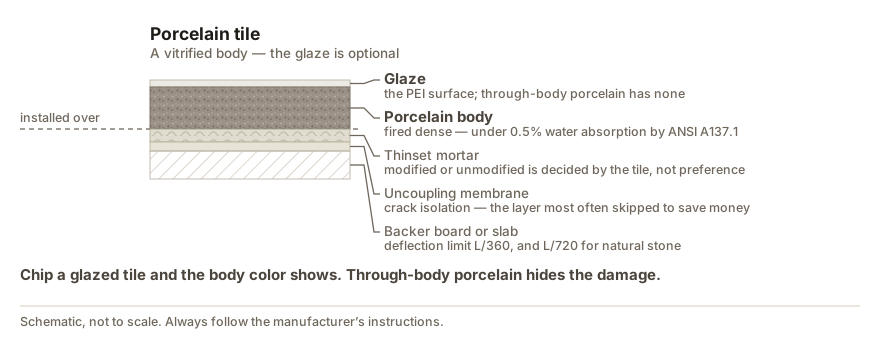
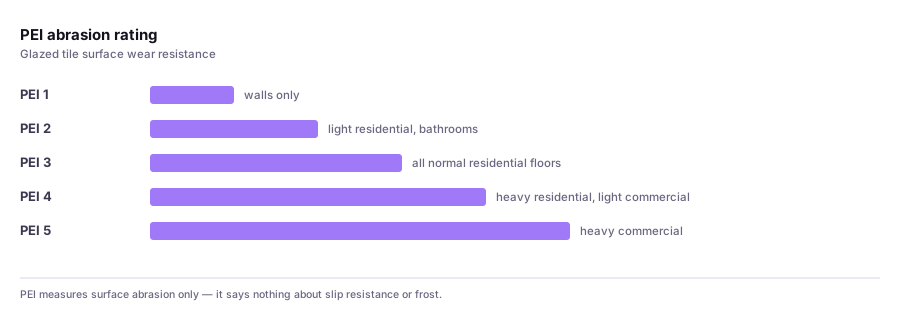
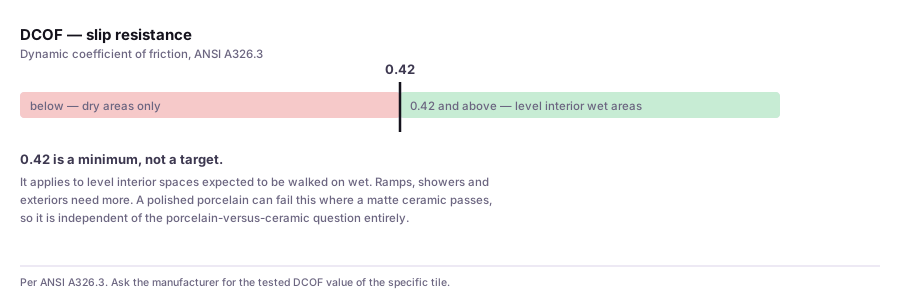
Everything below the body is installation, and it is where tile jobs fail.PEI covers surface abrasion only — not slip, not frost.0.42 is a floor, not a target. Ramps and showers need more.
Class 1–2: walls and light residential. Class 3: most residential floors. Class 4: heavy residential and light commercial. Class 5: heavy commercial. Buy Class 4+ for a busy home.
ANSI A137.1 requires a wet DCOF of 0.42 or greater for tile recommended for level interior floors expected to be walked on when wet, measured by the DCOF AcuTest per ANSI A326.3. Polished porcelain often fails this — don't use it in a shower or entry. Note that 0.42 is a minimum threshold, not a guarantee of suitability: the specifier still has to weigh traffic, contaminants and maintenance.
Glazed porcelain has the pattern only on the surface; a deep chip shows the body color. Through-body and double-loaded porcelain carry the pattern deeper and are used in heavy commercial.
Mechanically ground to an exact size, allowing grout joints as tight as 1/16". Non-rectified tile needs wider joints to absorb size variation.
Tiles with any side 15" or longer need substrate flatness within 1/8" in 10 ft and no more than 1/16" variation in 24", measured from the high points. A leveling clip system is normal practice. Substrate prep is where large-format budgets are won or lost.
Porcelain plank runs 6×24, 8×48, 9×60 and beyond, and is now the most convincing wood substitute available — it takes a dog, a wet mop and a sunroom in ways real wood and vinyl can't, and the pattern is fired in rather than printed on a film that can wear through. The trade-off is that everything below gets harder as the plank gets longer.
This is the plank-specific spec most people miss. Where a tile has any side 15" or longer, the TCNA Handbook and ANSI A108.02 cap a running-bond offset at 33% of the tile length unless the manufacturer says otherwise. Tiles crown very slightly at the center; a 50% brick-set puts one plank's end at its neighbor's high point and maximizes lippage. A one-third stagger lands the joint on a flatter part of the plank. Anything beyond 33% requires a mock-up approved by the specifier and the owner.
Allowable warpage is a percentage of tile length, so the same tolerance produces far more absolute deviation on a 48" plank than on a 12" square. Check planks for bow before setting, dry-lay a run, and reject a batch that rocks on a straightedge — you can't trowel out a warped plank.
1/8" is the practical minimum and 3/16" is safer on long planks. A tighter joint has no room to absorb warpage or size variation, so every imperfection reads as lippage. Buyers asking for a wood-tight 1/16" joint on a 48" plank should be shown a mock-up first.
A membrane such as a dimpled polyethylene sheet isolates the tile from subfloor movement and is the standard defense against cracked tile and grout. Non-negotiable over plywood.
Cement grout is porous and needs sealing. Epoxy grout is waterproof, stain-proof and doesn't need sealing, but costs more and is harder to install. Urethane grout splits the difference.
The spec sheet
Key specifications
Water absorption
≤ 0.5% (ASTM C373)
PEI
Class 1–5 (buy 4+)
Wet DCOF
≥ 0.42 required
Formats
2"×2" mosaic to 5×10 ft slab
Plank sizes
6×24" up to 12×72"
Plank offset
33% max (TCNA / ANSI A108.02)
Plank grout joint
1/8" minimum, 3/16" safer
Routine
Sweep or vacuum grit daily; it is grit that dulls glaze
Damp-mop with a pH-neutral tile cleaner
Squeegee shower floors; ventilate wet rooms
Mats at entries to cut abrasive tracking
Periodic / deep
Reseal cement grout every 1–2 years in wet areas
Steam clean grout lines; use an oxygen-based grout cleaner for discoloration
Re-caulk changes of plane (corners, floor-wall) rather than grouting them
Never do this
Never use vinegar or acidic cleaners on cement grout — they etch it
Never use bleach on colored grout
Never use wax or oil-based "shine" products on porcelain
The tile is rarely the expensive part. Substrate prep, uncoupling membrane and skilled labor are — and skimping on those is what causes the cracks people blame on the tile. On wood-look plank, put two more questions to any bid: what offset, and what grout joint. A 50% brick-set on a 48" plank with a 1/16" joint will generate lippage complaints no matter how good the tile is.
Each feature paired with the benefit it delivers. A spec on its own tells you nothing about
whether it is worth paying for.
01
Water absorption at or below 0.5%
Effectively impervious and frost-proof. It goes anywhere — shower floor, patio, entry — with no sealing and no seasonal worry.
02
PEI Class 4 or 5 glaze
Rated for commercial traffic. In a house it means the floor outlives the kitchen it was installed in, twice.
03
Digital inkjet printing
Convincing wood, marble and concrete looks with veining that can run through the body, so a chip doesn’t expose a foreign color.
04
Best thermal conductor of any floor
Delivers more heat into the room from a radiant system than any other surface, which is what makes a tiled bathroom floor genuinely pleasant.
05
Rectified edges for tight joints
Mechanically ground to exact size, allowing 1/16 inch joints and a near-monolithic look that non-rectified tile can’t achieve.
Before you buy
What to confirm on the quote
The specifications below decide how this floor performs. Ask for them in writing — a sample
board and a price per square foot do not tell you any of it.
Water absorption: confirm it is ≤ 0.5% (ASTM C373)
PEI: confirm it is Class 1–5 (buy 4+)
Wet DCOF: confirm it is ≥ 0.42 required
Formats: confirm it is 2"×2" mosaic to 5×10 ft slab
Plank sizes: confirm it is 6×24" up to 12×72"
Plank offset: confirm it is 33% max (TCNA / ANSI A108.02)
Plank grout joint: confirm it is 1/8" minimum, 3/16" safer
Substrate: ask what preparation is included and what is excluded
Warranty: ask what is covered after year one, and whether labor is included
Attic stock: order about 5% extra and keep it — replacements bought later rarely match
Porcelain Tile runs $8.00–$29.00 per square foot installed in 2026 — $2.00 to $15.00 for material and $6.00 to $14.00 for professional labor. Spread across an expected 50 to 100 year service life that works out near $0.25 per square foot per year. Regional variation of 20 to 40% is normal, and demolition, subfloor prep and trim are extra.
50 to 100 years, assuming it went into an appropriate room over a properly prepared substrate and gets the maintenance it needs. The tile is rarely the expensive part. Substrate prep, uncoupling membrane and skilled labor are — and skimping on those is what causes the cracks people blame on the tile. On wood-look plank, put two more questions to any bid: what offset, and what grout joint. A 50% brick-set on a 48" plank with a 1/16" joint will generate lippage complaints no matter how good the tile is.
Kitchen, Full Bathroom, Basement (below grade), Bedroom, Entry / Mudroom, Laundry Room, Garage / Workshop, Sunroom / Four-Season Room. Bathrooms, kitchens, entries, mudrooms. Over radiant heat (best conductor of any floor).
Home Gym. Rooms where comfort underfoot is a priority. DIY projects without tile experience.
Yes — porcelain tile is unaffected by water, which is why it works in bathrooms, laundries and below grade. Note that a waterproof material does not make a waterproof floor: water can still travel through seams to the subfloor beneath.
Sweep or vacuum grit daily; it is grit that dulls glaze. Damp-mop with a pH-neutral tile cleaner. Critically: never use vinegar or acidic cleaners on cement grout — they etch it.
Alternatives
Compare Porcelain Tile with the alternatives
Same family first, then products with a similar look from other families.